 Stylez
For people across the United States, Europe, and beyond, live performances hold a special kind of magic. Even with Spotify, AirPods, Dolby Atmos audio, and thousands of perfectly produced tracks at our fingertips, millions still spend money, time, and energy to attend concerts, festivals, and shows every year. Whether it’s a small indie gig in Berlin, a massive pop tour in Los Angeles, or an orchestral performance at the Vienna Musikverein, experiencing music live feels fundamentally different from listening to the same songs on your favorite streaming platform.
This raises a compelling question: Why does live music feel so different—often better—than recordings?
The truth is multi-layered. It involves acoustics, psychology, culture, neuroscience, social energy, and even the imperfections we normally try to avoid in everyday life.
What follows is an in-depth look at the powerful reasons behind this difference and why the “live music phenomenon” remains so universal and timeless.
The Sound of the Space Becomes Part of the Music
Recordings are defined by control. Studios are designed to eliminate unpredictability, create clarity, and engineer perfection. Yet the moment music enters a live environment, the physical space becomes part of the performance.
A cathedral in Italy adds its hollow echo.
A concrete underground club in London creates dense, bouncing reverb.
A wooden theater in New York absorbs some frequencies while enhancing others.
Live spaces function like additional instruments. They shape sound in ways even the most advanced digital plug-ins can’t fully replicate. Instead of a controlled environment, you get a naturally evolving acoustic landscape—one that feels raw, unique, and impossible to repeat.
Music You Can Feel, Not Just Hear
Another defining difference is the physicality of live sound. Anyone who has stood near a stage or a speaker stack knows the experience:
Your chest vibrates.
Your legs pick up the bass waves.
The floor pulses beneath your feet.
This full-body sensation activates more than your ears. Vibrational energy affects your nervous system, muscles, and even your heartbeat. You don’t just listen to a live performance—you inhabit it.
Recordings, however crisp and clean, rarely provide this kind of intensity. Even high-end home audio systems struggle to reproduce the physical impact of a large venue pushing massive amounts of sound energy into the space around you.
Human Imperfection Creates Emotional Authenticity
Studio recordings frequently undergo countless edits:
Vocals are pitch-corrected.
Instruments are layered.
Drums are quantized.
Timing is aligned to perfection.
Mistakes are erased.
But live performances are inherently imperfect—and that’s part of their charm.
A singer may push their voice harder than usual.
A guitarist may improvise.
A drummer may shift the groove, playing slightly behind or ahead of the beat.
A violinist in an orchestra may add a subtle nuance that didn’t exist in rehearsal.
These microvariations remind audiences that music is a living art form, performed in real time by real humans. Ironically, the imperfections create a deeper sense of “truth” and emotional connection.
The Brain Responds More Strongly to Live Music
The difference isn’t only auditory—it’s biological. Research in neurology shows that live music stimulates more intense biochemical reactions in the human brain.
During a live show, people experience increased levels of:
- Dopamine, associated with reward
- Oxytocin, associated with bonding
- Serotonin, associated with mood regulation
- Endorphins, associated with pleasure and euphoria
This explains why crowds at festivals or concerts often enter a shared, elevated emotional state. It’s not just the music—it’s the collective neurochemical rush. Recorded music can certainly affect our emotions, but it rarely triggers this kind of synchronized physiological response.
Seeing the Performers Changes the Experience
Humans are deeply visual creatures. Watching a musician perform creates layers of emotional meaning that audio alone cannot provide.
When you see a singer breathe, struggle, smile, crack, cry, or connect with the audience, your brain mirrors their emotions. Body movements, facial expressions, and non-verbal cues influence how you perceive the music. Even subtle gestures, such as a guitarist closing their eyes during a solo or a conductor giving a dramatic cue, change how the sound feels.
Live visuals add narrative, context, and personality. They transform a song from a mere audio file into a living story.
The Social Energy of a Crowd Enhances Everything
Humans have evolved to react to group energy. Being part of a crowd—whether at a rock concert, opera hall, rave, or jazz club—creates a powerful sense of belonging. This phenomenon, sometimes called “collective effervescence,” can amplify emotional experiences.
At live concerts:
People sing together.
People dance together.
People scream together.
People share the same rhythm, physically and emotionally.
This shared experience alters your perception of the music. You’re not just listening; you’re participating in a moment of communal expression.
Recordings, even when shared with friends, rarely create this same intensity or unity.
Unpredictability Makes Live Music Exciting
One of the greatest differences between live performances and recordings is unpredictability. You don’t know exactly what will happen at a concert.
Maybe the band will add an extended outro.
Maybe the singer will laugh, cry, or tell a personal story.
Maybe a musician will miss a cue.
Maybe something magical will happen that won’t happen ever again.
This sense of possibility keeps audiences emotionally present. It fuels excitement, engagement, and anticipation. Even if a show goes “wrong,” the unexpected becomes part of the performance’s charm and authenticity.
Recorded music, by contrast, is predictable. You know every beat, every lyric, every transition. It becomes familiar, comfortable, but not surprising.
The Artist-Audience Relationship Becomes Real
At a live show, the distance between the creator and the listener collapses.
Artists often talk to their fans, share stories, express gratitude, or react spontaneously to the crowd. You become part of their creative process—part of the energy that shapes their performance.
This relationship is intimate, even in huge stadiums. Fans often describe live concerts as moments when they feel “seen” or “connected” with the artist in a way recordings cannot provide.
Even subtle moments—eye contact, a smile, a wave—can create cherished memories that listeners carry long after the show ends.
Cultural and Ritualistic Meaning Adds Depth
Live music has always served a cultural function. In Europe, centuries-old traditions in opera houses, cathedrals, and concert halls created rituals around the concert experience. In the U.S., live music shaped the spirit of jazz clubs, rock scenes, and music festivals.
Attending a concert often feels like participating in a cultural ritual:
Buying merchandise
Sharing drinks
Waiting in line
Meeting new people
Feeling anticipation before the first note
These rituals create emotional significance that recordings simply cannot provide.
The Illusion of “Perfection” in Recordings Can Feel Cold
Modern music production often aims for perfection. But perfection can sometimes remove the rawness and vulnerability that make music emotionally powerful.
Live performances reintroduce:
Grit
Strain
Sweat
Tension
Release
Hearing a voice crack or a note bend can feel more intimate and authentic than hearing a flawless studio take. Many listeners describe live music as “real,” “raw,” or “human”—qualities often lost in recorded perfection.
Technology Has Increased the Gap Between Live and Recorded Music
This might sound counterintuitive, but modern recording technology has made live music feel even more special.
With streaming services optimizing every track for clarity, loudness, and consistency, studio music has become hyper-polished and uniform. Live performances, by contrast, stand out because they break from this sonic uniformity.
The more perfect recordings become, the more people long for the unpredictability and humanity of live shows.
The Memory of a Live Performance Lasts Longer
Live performances create multisensory memories—visual, auditory, emotional, social, and physical. This makes them more deeply encoded in the brain.
You remember:
Where you stood
How the lights looked
How the crowd sounded
How the bass felt in your chest
What the artist said
Who you were with
Recordings create memories, too, but they are usually tied to everyday life—commutes, workouts, studying, chores. Live performances become landmarks in our personal history.
Why Live Music Will Always Matter
Even with the rise of digital streaming, immersive audio technologies, and endless online access, live music continues to thrive. From stadium mega-tours across the U.S. to intimate clubs in Europe, people still seek the magic of being in the same physical space as the artists they love.
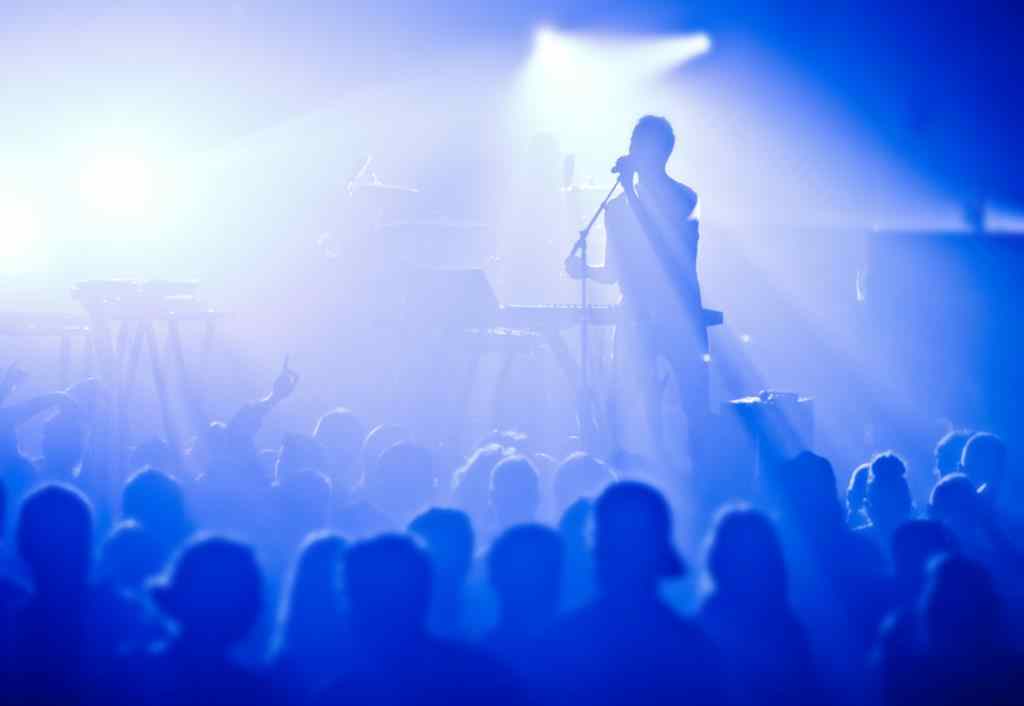
Live performances feel different from recordings because they’re more than sound. They are physical, emotional, communal, visual, unpredictable, and deeply human. They remind us that music is not just something we consume—it’s something we live.
This is why the excitement of a crowd, the vibration of the bass, the imperfections of the performance, and the presence of the artist combine into something recordings can never fully capture.
Live music is not just heard.
It is felt.
It is shared.
It is experienced.
And that’s why it will always hold a place in our culture, no matter how technology evolves.