 Stylez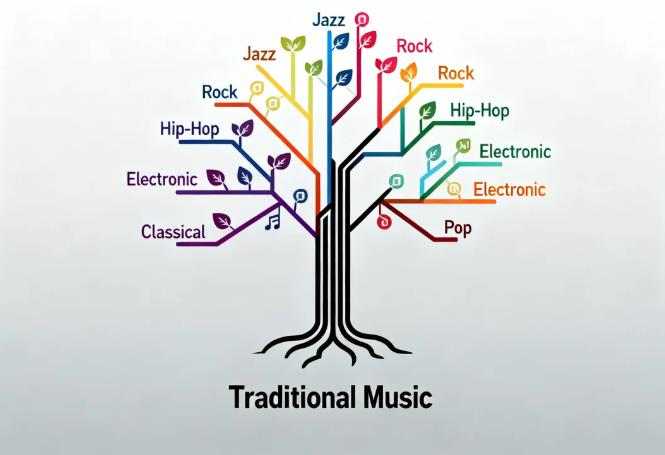
Music is not static—it breathes, mutates, and transforms with each generation. Every genre that exists today is the product of cultural identity, technological advancement, global exchange, and the timeless desire of people to express their emotions and stories. From jazz to hip-hop, from disco to EDM, music continuously reinvents itself to reflect the world around it.
Understanding how genres evolve offers insight not only into music itself, but into society. As culture shifts, so does sound. The following exploration traces how genres emerge, change, merge, and sometimes vanish, only to return decades later in surprising forms. Music history, in this sense, is never a straight line—it is a web of connection, influence, and reinvention.
Where Genres Begin
Music genres typically originate from specific communities, emerging as expressions of identity and shared experience. Early blues formed within African American communities as a response to hardship, spirituality, and daily life. Country evolved among working-class Americans, pulling from folk traditions brought by immigrants. Jazz grew in New Orleans, blending African rhythms, Caribbean influences, and European harmonies.
At the start, genres often arise not from commercial ambition but from necessity. They express struggle, joy, resistance, ritual, or social commentary. Punk began as a working-class rebellion against political stagnation and musical excess. Hip-hop started as a creative outlet for marginalized youth in the Bronx. These genres weren’t designed to be global movements—they became so because they resonated beyond their origins.
Another common factor in the birth of genres is rebellion. Young artists challenge established norms, pushing against musical structure, lyrical themes, or social conventions. Rock ’n’ roll shocked older generations with its sexuality and volume. Punk rejected polished production in favor of raw aggression. Innovation often grows out of defiance.
Technology also plays a defining role. The electric guitar enabled the rise of rock. Synthesizers defined electronic and pop music in the 1980s. Drum machines powered hip-hop and later electronic dance music. The evolution of technology doesn’t just influence genres—it often launches entirely new ones.
Forces That Shape Musical Evolution
Genres rarely stay pure for long. Their evolution is shaped by cultural contact, new tools, commercial pressures, and shifting public taste. Music is constantly in motion because the world around it is constantly changing.
A central driver of evolution is cultural exchange. When communities interact, so do their sounds. Reggae helped inspire early hip-hop through Jamaican sound-system culture. The British blues explosion of the 1960s drew heavily from African American music. Latin and Caribbean beats flow through today’s global pop. This mixing is not a modern trend—jazz itself was born from cross-cultural fusion.
Technology continues to accelerate evolution. Digital audio workstations, sampling techniques, Auto-Tune, and inexpensive home-studio tools have democratized music creation. Anyone with a laptop can create professional-sounding tracks, which means genres progress faster than ever before. Production tools shape aesthetics: the crisp precision of electronic drums, the lush texture of reverb-heavy pop, or the gritty distortion of modern trap.
Commercial forces also influence sound. Radio once dictated song length and structure. MTV made visuals essential to musical success. Today, streaming platforms reward catchy intros, shorter durations, and music that fits mood-based playlists. These pressures blur genre boundaries, pushing artists to combine elements from pop, hip-hop, electronic, and R&B to maximize reach.
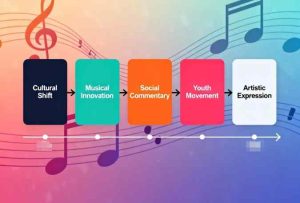
Social movements and youth culture deeply influence musical shifts. Punk captured frustration with political austerity. Grunge voiced the alienation of the early 1990s. Soul, funk, and hip-hop echoed the urgency of the civil rights struggle. LGBTQ+ communities shaped disco and house. Music often becomes a mirror of what a generation believes, fears, and desires.
The internet era has also given rise to micro-genres—hyperpop, vaporwave, bedroom pop, lo-fi hip-hop, and hundreds more. These scenes grow inside online communities rather than physical neighborhoods, developing aesthetic identities quickly and disappearing just as fast. Genre evolution has never been more rapid or more decentralized.
How Major Genres Have Transformed Over Time
Examining how specific genres have changed makes these forces easier to see.
Hip-hop, for instance, began at block parties in the Bronx, with DJs looping breakbeats and MCs energizing crowds. By the 1980s, it entered the mainstream with groups like Run-D.M.C., while artists such as Public Enemy infused political commentary. The 1990s brought narrative storytelling, regional identities, and the famous East Coast–West Coast divide. In the 2000s, southern trap took over with its heavy bass and rhythmic hi-hats. Today, hip-hop blends seamlessly with pop, rock, electronic, and global influences, making it one of the most versatile genres in the world.
Pop music evolves by absorbing the sounds of other genres. The Beatles blended rock and folk; Michael Jackson fused R&B with post-disco dance; the 2010s saw the explosion of EDM-influenced pop; the 2020s highlight minimalist, moody production popularized by artists like Billie Eilish. Pop remains relevant because it changes rapidly, reflecting technology, fashion, and emotional trends.
Rock provides a different example. Once the dominant global genre, rock splintered into countless subgenres—psychedelic, punk, grunge, metal, indie, post-rock, math rock. As the mainstream moved toward hip-hop and electronic styles, rock retreated into more niche communities. Instead of dying, it diversified into experimental and personal expressions, proving that genres often survive by fragmenting rather than staying central.
Electronic music illustrates technology’s direct impact on evolution. Early pioneers like Kraftwerk experimented with mechanical rhythms and synthesized soundscapes. Detroit techno and Chicago house gave electronic music its dance-floor identity. The 1990s rave movement brought trance and drum & bass. The 2010s saw the commercial EDM boom, while modern electronic music has splintered into hyperpop, synthwave, lo-fi, tech-house, and many other micro-scenes. As long as technology advances, electronic music will continue to evolve.
Digital Culture and the Blurring of Boundaries
The digital revolution may be the most transformative force in the history of genres. Streaming platforms have shifted the focus from albums to playlists, where “mood” often matters more than genre labels. Many listeners today identify music less by style and more by feeling—chill, upbeat, cinematic, nostalgic, atmospheric.
This has led to the collapse of traditional genre walls. Artists freely mix rap with punk, folk with electronica, country with trap. Genres no longer operate as strict categories but fluid identities. What once would have been considered experimental is now normal.
Social media accelerates this shift. TikTok in particular has reshaped how songs are designed and discovered. Quick hooks, distinctive beats, and memorable one-liners spread rapidly. Virality can break an unknown artist into the mainstream overnight. Hyperpop, for example, thrives on TikTok because its exaggerated, chaotic energy fits digital culture perfectly.
Sound now travels globally and instantly. A dance trend from Nigeria can influence American pop within weeks. A Korean group can top charts across Europe. A Latin track can dominate playlists in cities that barely spoke the language a decade ago. The internet has created a global musical ecosystem where genres evolve together, influencing one another in real time.
Music in a Globalized World
In the past, genres were tied to geography. Blues belonged to the American South. Reggae belonged to Jamaica. Flamenco belonged to Spain. Today, those borders are porous. International influence is now a core part of genre evolution.
K-Pop blends Western pop with Korean vocal styles, hip-hop rhythms, and EDM production. Latin pop has become a global force, led by artists like Bad Bunny, Rosalía, and Karol G. Afrobeats has reshaped club culture worldwide, bringing African rhythms and melodic sensibilities into mainstream pop.
Collaboration across continents is standard. American artists work with African producers, European DJs remix Latin hits, and Korean groups record English-language singles with Western songwriters. Music no longer evolves within isolated cultural bubbles—it evolves in a shared, interconnected world.
Where Genres Are Heading
The future of music will be even more fluid and unpredictable. Genre fusion will continue as artists draw from multiple traditions simultaneously. Micro-genres will rise and fall quickly, especially within online subcultures.
Artificial intelligence will become a creative partner rather than a replacement for artists, assisting with sound design, composition, and experimentation. AI may help generate new timbres and structures that don’t yet exist in human tradition, pushing genre evolution into uncharted territory.
Nostalgia cycles will keep resurfacing. The resurgence of 80s synthwave, 90s R&B aesthetics, and early-2000s Y2K pop shows that past styles often return with modern twists. These cycles breathe new life into old genres, blending memory with innovation.
Meanwhile, global influences will continue expanding. African, Middle Eastern, South Asian, and Latin American genres are increasingly present in Western mainstream music. As cultural dominance becomes more shared, the future of genre evolution will be more international than ever.
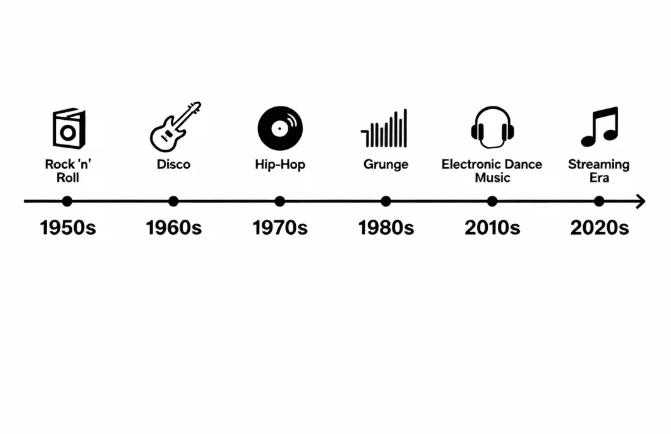
Music genres evolve because people evolve. They form as expressions of identity, emotion, and culture, then transform as societies shift, technologies change, and communities interact. What begins as rebellion becomes tradition; what disappears returns; what once belonged to one place becomes global.
Genres are not rigid boxes—they are living stories. They capture the rhythm of their time while shaping the sounds of the future. In an era defined by digital connection and cultural exchange, the evolution of music is accelerating faster than at any moment in history.
Music does not simply reflect change—it is change. And as long as people create, innovate, and express themselves, genres will continue to transform in ways both surprising and inspiring.